Readings:
[Common of a Prophetic Witness]
PRAYER (traditional language)
God, in whose service alone is perfect freedom: We give thanks to thee for William Lloyd Garrison and Maria Stewart, who witnessed that all are made in thine image and likeness. Fill us, like her, with the perseverance to break every chain of enslavement that, by thy Holy Spirit, thy people may overcome bondage and ignorance; through the merits of Jesus Christ our redeemer, who with thee and the Holy Spirit liveth and reigneth, one God, now and for ever. Amen
PRAYER (contemporary language)
God, in whose service alone is perfect freedom: We thank you for William Lloyd Garrison and Maria Stewart, who witnessed that all are made in your image and likeness. Fill us, like her, with the perseverance to break every chain of enslavement that, by your Holy Spirit, your people may overcome bondage and ignorance; through the merits of Jesus Christ our redeemer, who with you and the Holy Spirit lives and reigns, one God, now and for ever. Amen.
This commemoration appears in A Great Cloud of Witnesses.
Return to Lectionary Home Page
Webmaster: Charles Wohlers
Last updated: 15 October 2022
WILLIAM LLOYD GARRISON and
MARIA STEWART
PROPHETIC WITNESSES, 1879
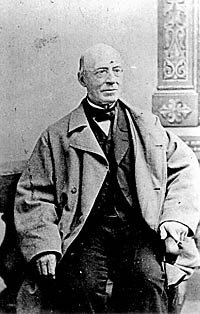 William Lloyd Garrison (December 10, 1805 – May 24, 1879) was a prominent American Christian, abolitionist, journalist, suffragist, and social reformer. He is best known for his widely read antislavery newspaper The Liberator, which he founded in 1831 and published in Boston until slavery in the United States was abolished by constitutional amendment in 1865. Garrison promoted "no-governmentism" and rejected the inherent validity of the American government on the basis that its engagement in war, imperialism, and slavery made it corrupt and tyrannical. He initially opposed violence as a principle and advocated for Christian nonresistance against evil; at the outbreak of the Civil War, he abandoned his previous principles and embraced the armed struggle and the Lincoln administration. He was one of the founders of the American Anti-Slavery Society and promoted immediate and uncompensated, as opposed to gradual and compensated, emancipation of slaves in the United States.
"The source of Garrison's power was the Bible. From his earliest days, he read the Bible constantly and prayed constantly. It was with this fire that he started his conflagration. ... So also, a prejudice against all fixed forms of worship, against the authority of human government, against every binding of the spirit into conformity with human law, – all these things grew up in Garrison's mind out of his Bible reading."
Like the other major abolitionist printer-publisher, the martyred Elijah Lovejoy, a price was on his head; he was burned in effigy and a gallows was erected in front of his Boston office.
more at Wikipedia
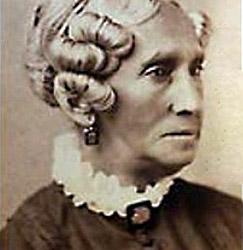 Maria Stewart (Maria Miller) (1803 – December 17, 1879) was an African American public speaker, abolitionist, and feminist. She was born in Hartford, Connecticut and at the age of five became an orphan and was sent to live with a minister and his family, where she was a servant in their home. She later moved to Boston, and married James W. Stewart. He died after only three years of marriage, and she was cheated out of a considerable inheritance. She then embarked on a short (1831-1833) writing and public speaking career, for which she is best known. Her most famous speech was Religion and the pure principles of Morality The sure Foundation on which We Must Build. This and others were published in William Lloyd Garrison's The Liberator.
She later moved to New York, and then to Washington, DC, where she was head matron of the Freedman's Hospital.
more from Wikipedia and Answers.com